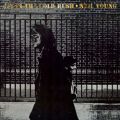
After the Gold Rush is Neil Young's masterpiece and is simply one of the greatest albums of all time. By just looking at the cover you know you are in for something truly special. Young's lyrical composition is the best it has ever been and so are the tunes of the 11 tracks. This album is a must have for not only Neil Young fans but for anyone that enjoys music as an art form.
AFTER THE GOLD RUSH and HARVEST, for me, are rare examples of wishing there was a "Six Stars - Extraordinary" rating level. The songwriting and performance here and on Neil's next effort are so unique and timeless that there has to be a way to set their rating and review on a higher apex. This is in my Folk-Rock Top Ten, no mean feat considering that includes HIGHWAY 61 REVISITED and TURN! TURN! TURN! The performance and recording quality are stronger than on Neil's past two releases, thus better revealing the strength of the songwriting. A Desert Island Disc that defines the genre.
Hammel Hammel
January 13, 2016
Neil's best overall album, that's saying a lot. To us kids who took awhile to figure out why Dylan and Cohen were important, this was a beautiful introduction to real song-writing, something different then the Stones or Beatles. "Don't let It Bring You Down" would haunt us w. those unique vocals, "Only Love Can Break Your Heart" was pure sing-along fun. Even the 1 minute ditties that closed each L.P. side were perfect. This album ( yes, even more then "Harvest) got us waiting to buy a host of Young's 'Golden Age LP's.. On The Beach, Zuma, Rust Never Sleeps, Comes A Time. Phenominal biblography, all so unique. Neil is Canada's greatest gift to rock and folk music.
Vic Correll
November 30, 2016
This is simply the best album by Neil Young, in my opinion. In my teenage years, I was very fond of the FM radio staples from side one of the LP: After the Gold Rush, Only Love Will Break Your Heart, and Southern Man. I became aware of so many other incredible songs when I experienced the album as a whole. Standouts include Don't Let It Bring You Down, Birds, and When You Dance (I Can Really Love). Neil Young can take on ballads and rockers equally well. This album hits on all cylinders.
Steven Hayes
July 7, 2015
Neil Young's best with the possible exception of Tonight's The Night, which if you play back to back after Gold Rush will explain the genius and the glory of Neil Young. From Only Love Can Break Your Heart to Tired Eyes, I mean, c'mon, who else?
Neil Young is one of those artists like Bob Dylan or The Beatles where it’s impossible to say “this is his best album”. He has made so many masterpieces over his time in the music business. I will say however that this is amongst his very best. From the lead of track Tell Me Why to each song that follows they all hit you right in your heart and allow you to attach your own meaning to their profound depth. I first discovered this record through my mother’s record collection as a young man, now as a 36 year old I can say it meant a lot to both of us with our own reasons attached, and that is what makes a great album. It is timeless.
S Swensen
January 26, 2018
I never tire of this album. Even the silly-sweet "Till the Morning Comes", and Neil's cover of "Oh Lonesome Me" fit nicely with the other nine gems. I love the piano parts that the then teenager-Nils Loftgren adds to the album. His talent is especially important on "Southern Man" and my personal favorite: "Don't let it bring you down". To add, Jack Nitzsche also played a great piano on the album.
In a richly diverse career, Neil Young's critically acclaimed "After The Gold Rush" is for many, a strong representation of the many styles he has crafted. From the harmonic West coast folk rock, influenced directly from his tenure with Crosby, Stills, Nash & Young, to intricate melodic folk/pop, to the harder krunk rock of later years, this 1970 collection could be, particularly for a new listener, an excellent place to dip into his vast recording catalog. In addition, the singer's experience with CSN&Y had given him cribs in arrangement and recording techniques that certainly benefited his strong sense of melody. It is a strictly solo venture, however, Young leans on various members of Crazy Horse and Nils Lofgren, a young virtuoso providing guitar and piano. All self composed, except for his unashamed tear jerking cover of Don Gibson's "Oh Lonesome Me", "After The Gold Rush" contains many of his best known songs, including the smartly harmonized "Tell Me Why", the classic piano ballad "Only Love Can Break Your Heart", and the edgy rocker, "Southern Man". The poignancy of the record can be identified by its insular themes, as Young often identifies himself as the lovelorn troubadour, spilling his heart with simple, sullen sentiments.
It's the title track that steals the show though, with its scornful view of mankind blighting the world with pollution and warfare, all played through the relative dichotomy of the most beautiful tune. The often divisive "Southern Man", is fittingly, a harder affair, with a basic riff that mirrors "Cowgirl In The Sand" from "Everybody Knows This Is Nowhere". The motif is lazily repeated on the lyrically clumsy "When You Dance, I Really Can Love" with the singer desperately searching for appropriate romantic rhymes over an arrangement that is as close to conventional pop as he would ever deliver ("Then take a chance? In a trance, While the lonely mingle, With circumstance"). But mostly, one has to admire the simplistic nature of the record, the sparse instrumentation, and above all the relaxed ambiance. It's difficult to find similar folk/country rock albums with a first side that is as consistently strong as "After The Gold Rush", and although there is a slight deterioration on side two, overall it's still a memorable recording.
"After The Gold Rush" is an album buoyed by the confidence of Young's tenure with Crosby, Stills, Nash and Young, and yet its inspiration is squarely routed by his own vision. It's not only multifaceted and musically mature, but contains a healthy share of magical songs.
Nick Birch
January 17, 2017
As a fan of Neil Young for 40+ years and having listened to all of his varied albums, this one remains my favourite. It's a gem of tough protest, tender love songs, rockstar angst, social comment and environmental worries. All beautifully played and sang in an understated, well recorded way. If you only on one Neil Young album, get this one. A real classic album that is always in my top 5 all time best albums.
Heath Bartlett
December 7, 2016
After joining forces with Crosby-Stills-Nash, Neil Young became a much more internal songwriter, and that change prompted the change in sound on his third record After The Gold Rush. A true highlight of the singer/songwriter era, the record shifts between bold political statements, gentle ballads, and bracing rockers. Young is growing as both a lyricist and a musician, and After The Gold Rush celebrates that growth. Key tracks are Tell Me Why, the title track, Only Love Can Break Your Heart, Southern Man, and When You Dance I Can Really Love.




![After the Gold Rush [50th Anniversary]](https://fastly-s3.allmusic.com/release/mr0005328697/front/120/t5A-zl5bTiXV2NnLZ28eXIAf7E_1E-2MlBBPmPAXRBU=.jpg)
![After the Goldrush [50th Anniversary Edition]](https://fastly-s3.allmusic.com/release/mr0005302172/front/120/muayblneOGs7KqCpwFx335hUoDg0hsvx4F4sL4oO-nA=.jpg)


![Paradox [Original Music from the Film]](/criselda-https-fastly-s3.allmusic.com/release/mr0004867879/front/120/ZrXKls2oSm-osBEAHJq_qoAf7E_1E-2MlBBPmPAXRBU=.jpg)